
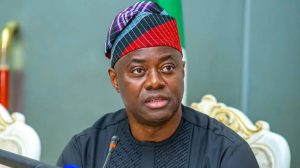
Prince Adedeji Ola, Special Assistant to Oyo State Governor Seyi Makinde on Political Matters, has expressed confidence in the governor’s presidential ambition, insisting that his aspiration to lead Nigeria in 2027 is realistic and achievable.
Ola also expressed optimism about the prospects of the Allied Peoples Movement (APM) in the forthcoming general elections, arguing that Nigerians are dissatisfied with the current administration over its policies, insecurity and the state of the economy.
In this interview with KAZEEM AWOJOODU, he speaks on Makinde’s presidential ambition, the recent resignation of political appointees in Oyo State, youth inclusion in governance, the administration’s performance and the 2027 elections. He also predicts that President Bola Tinubu could assume an advisory role under a Makinde-led government.
Excerpts:
How optimistic are you about the chances of Makinde and the Allied Peoples Movement (APM) in the forthcoming elections?
We are confident of winning the election. At the national level, we believe Nigerians are dissatisfied with the current administration because of issues surrounding its policies, insecurity and the state of the economy. People are looking for leadership that can address these challenges and provide relief from the difficulties they are experiencing.
We believe Governor Makinde is equipped to provide that leadership. If you examine the Reset Nigeria Agenda manifesto launched recently, you will discover that it is not limited to making promises. It identifies the problems facing the country, examines the challenges and proposes solutions.
The manifesto is comprehensive, and we intend to take its message to communities across the country. In terms of age, experience and previous achievements in public office, we believe Governor Makinde is well positioned to succeed President Bola Tinubu.
He has demonstrated his capacity in Oyo State, and we are confident that he can bring that experience to the national level. We also expect President Tinubu to assume an advisory role after Governor Makinde becomes president in 2027.
Some people believe Governor Makinde’s presidential ambition is unrealistic. They question how he intends to secure the necessary political support across the country. Even some political allies appear to be expressing different positions about the presidential contest. What is your response to those who describe the ambition as a joke?
My response is straightforward. When Governor Seyi Makinde aspired to become governor of Oyo State, there were people who questioned his ambition. Some argued that he had not previously served as a councillor or commissioner and wondered how he intended to become governor.
However, the people of Oyo State eventually made their decision. We should therefore allow the electorate to decide when the time comes. Political ambitions should not be dismissed simply because some people consider them difficult to achieve.
We are not merely making promises or engaging in political rhetoric. We have presented what we intend to offer Nigerians, and we are prepared to take that message to every part of the country.
Our ambition is realistic, and we are serious about it. We are confident that Governor Makinde will become president in 2027, while President Tinubu will serve in an advisory capacity afterwards.
You are one of the young people in the governor’s administration. How would you assess his commitment to youth engagement and inclusion since he assumed office?
Without much rhetoric, there is considerable evidence of the governor’s commitment to youth inclusion in government. I am a typical example.
Governor Seyi Makinde has prioritised the involvement of young people in governance. Under his administration, the narrative has changed from the belief that one must have connections or a political godfather before securing a strategic position in government.
Growing up, we were made to believe that a person had to spend many years around certain political figures, irrespective of their qualifications or what they could contribute, before being considered for an appointment. In some cases, people were assessed based on their family backgrounds and political connections.
That narrative has changed to some extent. If you can develop initiatives and demonstrate your capacity, you can attract attention and opportunities without necessarily having to visit the home of a political godfather.
In my own case, I was appointed based on my active participation in results-oriented activities. I have been involved in non-governmental organisations, youth-focused social activities and initiatives centred on youth empowerment. I also write extensively, particularly on social media, about issues affecting young people and society.
These activities brought me to the attention of Governor Makinde and other people who believe in the capacity of young people. Their support and recommendations contributed to where I am today.
Beyond political appointments, the administration has also recorded employment opportunities. More than 23,000 people have reportedly been recruited into different sectors, including the teaching service, civil service and hospital management system, among others.
The administration has also provided opportunities for young people through political appointments at both state and local government levels, from special assistants to commissioners.
During the 2019 electioneering campaign, Governor Makinde promised to appoint a person below the age of 30 as Commissioner for Youth and Sports. Despite pressure from different quarters to nominate preferred candidates after he assumed office, he remained committed to his promise.
He appointed a young person below the age of 30, demonstrating his willingness to translate campaign promises into action. That approach helped establish a template for youth participation in government.
The administration has also made efforts towards women’s inclusion. We have had women serving as Secretaries to the State Government and in other political positions.
At the local government level, young people have also been appointed as supervisory councillors and special assistants. Even the Speaker of the Oyo State House of Assembly assumed office at a relatively young age.
These developments demonstrate the opportunities created for young people across different levels of government. I believe Governor Makinde has established a benchmark for youth inclusion and good governance that subsequent administrations should sustain.
You are a Special Assistant on Political Matters, a position many people might ordinarily associate with older politicians. How have you managed the responsibilities of the office? Also, considering the expectations of young people who voted for this administration, how would you assess your performance and that of other young political appointees?
I think the question has several dimensions, and I will address them one after the other.
Some people believe that the position of Special Assistant on Political Matters should be reserved for older people. However, political affairs are not restricted to partisan politics; they also involve governance.
The office is strategically positioned to help ensure that the dividends of democracy reach the grassroots. It involves stakeholder engagement, participation in decision-making and the development of initiatives that can help translate government promises into tangible results.
Therefore, the responsibility goes beyond politics. It is also about good governance and ensuring that government policies and programmes reach the people.
On the performance of young political appointees, I would say that, from my observation, we are doing well. Governor Makinde has provided an enabling environment for us to work and has created opportunities for us to engage with him whenever necessary.
For instance, last year, I organised a programme that brought together stakeholders from different walks of life to discuss emerging issues capable of affecting the Omituntun 2.0 agenda.
The governor approved the programme, although he travelled out of the country on the day it was held. Several commissioners attended, interacted with participants and received recommendations that could help their respective ministries and agencies deliver on government policies and commitments.
We are doing our best, and we intend to sustain our efforts until the end of the administration.
As the governor has consistently maintained, we will continue to serve the people of Oyo State until the last minute of May 29. We have experienced Omituntun 1.0 and are currently in the Omituntun 2.0 phase. People are already looking forward to what could become Omituntun 3.0 if the opportunity arises.
Some people have expressed concern over the possible implications of political developments in the state, particularly the resignation of some political appointees and prominent figures. Do you think these developments could affect the administration’s political prospects?
What I can say is that the forthcoming general election will be a contest between the people who are enjoying good governance and individuals whom we believe are driven by personal interests.
Consider pensioners who have been receiving their pensions without interruption. Some people once described them as the “living dead”, but they are now enjoying regular pension payments.
Consider civil servants who receive their salaries on or before the 25th of every month, workers who have benefited from promotions and incentives, and market men and women who are conducting their businesses in an improved economic environment.
These are among the people who have benefited from the administration. We believe they will stand with the government and support the APM and its candidates, including those promoting the Reset Nigeria Agenda and Omituntun 3.0.

