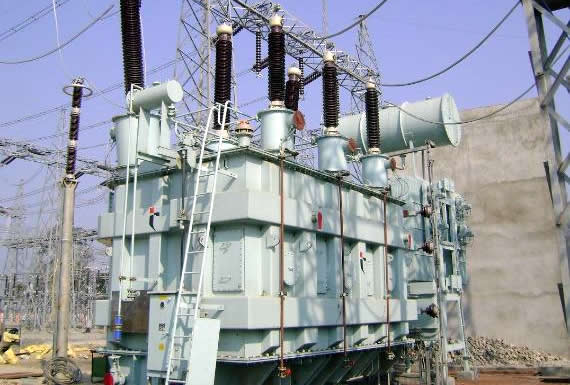
Nigeria’s power sector has attracted at least $3.653 billion in World Bank-backed funding over the last 24 years, yet millions of Nigerians continue to face erratic electricity supply, recurring national grid failures, and heavy dependence on generators.
An analysis of World Bank-supported electricity projects implemented between 2001 and 2024 shows that the funding was directed towards transmission infrastructure upgrades, sector reforms, rural electrification, renewable energy development, and recovery programmes aimed at improving the country’s struggling power sector.
According to World Bank data cited by Statisense, major interventions include the $100 million Transmission Development Project launched in 2001, the $172 million National Energy Development Project in 2005, and the $400 million Nigeria Electricity and Gas Improvement Project introduced in 2009.
Other notable projects include the $145 million Nigeria Power Sector Guarantees Project in 2014, the $486 million Nigeria Electricity Transmission Project and $350 million Nigeria Electrification Project in 2018, the $750 million Power Sector Recovery Programme approved in 2020, the $750 million Distributed Access through Renewable Energy Scale-Up Programme launched in 2023, and the $500 million Sustainable Power and Irration for Nigeria (SPIN) Project introduced in 2024.
Together, these projects account for approximately $3.653 billion in funding, excluding regional interconnection and hydroelectric rehabilitation initiatives whose financial details were not disclosed.
Despite the substantial investments, Nigeria’s electricity sector continues to fall short of meeting the needs of its growing population and economy. The national grid has suffered repeated collapses, while power generation levels have remained below expectations for Africa’s largest population.
As a result, households and businesses across the country continue to rely heavily on petrol and diesel generators due to unreliable electricity supplied by distribution companies.
Industry stakeholders have attributed the sector’s persistent challenges to several factors, including inadequate transmission infrastructure, liquidity constraints within the power market, gas supply shortages, vandalism, insufficient investment, and inconsistent government policies.
Over the years, the World Bank’s approach has evolved from focusing primarily on transmission and gas-based projects to prioritising renewable energy and decentralised power solutions.
Recent initiatives such as the Distributed Access through Renewable Energy Scale-Up Programme and the Sustainable Power and Irrigation for Nigeria Project are designed to expand access to solar-powered electricity, particularly in rural and underserved communities.
The World Bank has maintained that these programmes are intended to improve electricity access, strengthen transmission networks, and support reforms capable of attracting greater private-sector investment into the industry.
However, concerns remain over the pace of implementation and the extent to which these interventions have translated into meaningful improvements for consumers. Businesses continue to cite high energy costs as a major challenge, with many manufacturers spending heavily on self-generated power due to unreliable grid supply.
The ongoing electricity crisis continues to affect productivity, healthcare services, small businesses, and overall living standards. Analysts argue that Nigeria’s continued reliance on donor-funded interventions highlights the deep-rooted structural issues facing the power sector, more than a decade after the privatisation of electricity generation and distribution companies.