
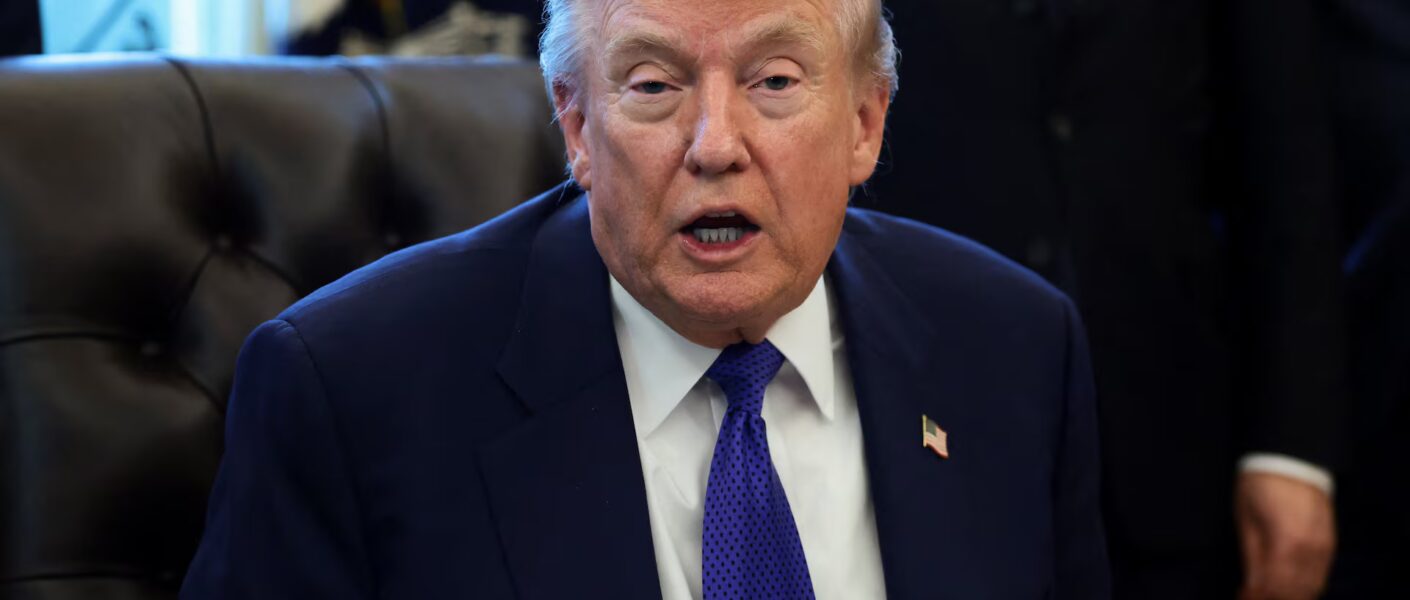
US President Donald Trump has warned that NATO could face a “very bad future” if allied nations fail to support the United States in efforts to reopen the strategic Strait of Hormuz amid escalating tensions involving Iran.
Speaking during an interview, Trump urged major global powers and NATO partners to contribute to securing the crucial shipping route, which is responsible for transporting a significant share of the world’s oil supply.
According to the US president, it is only fair that countries benefiting from the waterway help protect it.
“It’s only appropriate that people who are the beneficiaries of the Strait will help to make sure that nothing bad happens there,” Trump said, noting that Europe and China rely far more heavily on oil shipments through the Gulf than the United States.
He warned that a refusal from allies to assist Washington could have serious consequences for the future of NATO.
“If there’s no response or if it’s a negative response, I think it will be very bad for the future of NATO,” he added.
Trump’s remarks come after he appealed to several countries — including China, France, Japan, South Korea and the United Kingdom — to join a coordinated international effort to reopen the narrow waterway.
The Strait of Hormuz, located between Iran and the Arabian Peninsula, is widely regarded as one of the world’s most critical energy chokepoints, with roughly one-fifth of global oil shipments passing through it each day.
Tensions around the route escalated following military strikes by the United States and Israel on Iranian targets more than two weeks ago. In response, Tehran restricted shipping activity in the area, raising fears about the stability of global energy supplies.
The disruption has already rattled international markets, with oil prices climbing sharply since the conflict began.
Despite calling for international cooperation, Trump said he is uncertain whether allied countries will respond quickly.
“We have a thing called NATO,” he said. “We’ve been very sweet. We didn’t have to help them with Ukraine. Ukraine is thousands of miles away from us. But we helped them. Now we’ll see if they help us.”
The US president said he expects allies to provide whatever support is necessary, including naval assets such as minesweepers to clear possible sea mines in the Gulf, as well as military capabilities to counter threats like drones and coastal attacks.
Trump also called on China to help stabilise the shipping route ahead of his planned visit to Beijing later this month for talks with Chinese President Xi Jinping, warning that waiting until the summit would be too late.
“I think China should help too because China gets most of its oil from the Strait,” he said.
The US leader also expressed frustration with the United Kingdom’s response following a phone conversation with Prime Minister Keir Starmer, saying London had been slow to commit naval support.
Trump further warned that the United States could launch additional strikes on Kharg Island, Iran’s main oil export hub, and potentially target other key oil infrastructure if tensions escalate.
The ongoing crisis has already affected several allied forces operating in the region. Reports indicate that a French soldier was killed in an Iranian drone strike in Iraq, while an Italian aircraft was destroyed at a military base in Kuwait.
Trump also addressed reports suggesting Russia may be assisting Iran with satellite intelligence. While he said he could not confirm the claims, he acknowledged the complex web of global military alliances involved in the conflict.
The growing tensions have raised fears of a wider regional confrontation and increased concerns about the stability of global energy markets if shipping through the Strait of Hormuz remains disrupted.