US President Donald Trump has warned that NATO’s future could be at risk if allied nations fail to support Washington in efforts to reopen the strategic Strait of Hormuz amid the ongoing conflict involving Iran.
Speaking in an interview, Trump called on US allies to help secure the crucial shipping lane, which plays a major role in the global oil trade.
“It’s only appropriate that people who are the beneficiaries of the Strait will help to make sure that nothing bad happens there,” Trump said, noting that Europe and China rely more heavily on Gulf oil shipments than the United States.
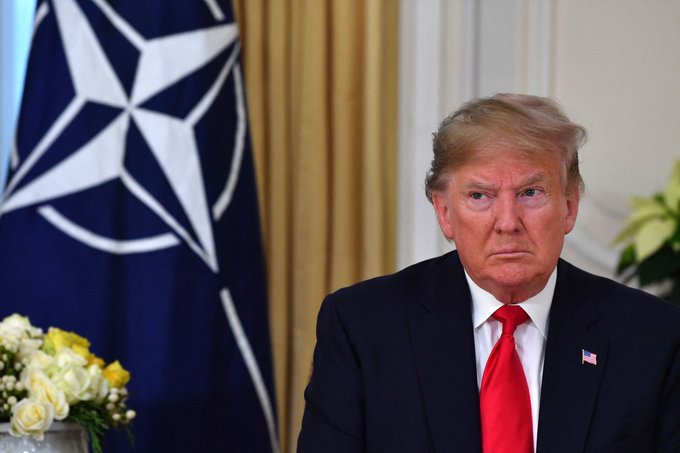
He cautioned that a lack of support from allies could have serious implications for the alliance. “If there’s no response or if it’s a negative response, I think it will be very bad for the future of NATO,” he added.
Trump’s remarks followed an appeal to several major economies — including China, France, Japan, South Korea and the United Kingdom — to participate in a coordinated effort to reopen the narrow waterway.
The Strait of Hormuz, located between Iran and the Arabian Peninsula, is one of the world’s most critical energy chokepoints, with about one-fifth of global oil shipments passing through it. Tensions in the area escalated after US and Israeli strikes on Iranian targets more than two weeks ago, prompting Tehran to restrict shipping in the region.
The disruption has unsettled global energy markets, with oil prices surging since the conflict began.
Despite calling for support, Trump expressed skepticism that allies would respond quickly. He referenced NATO and pointed out that the United States had supported European allies during the war in Ukraine.
“We have a thing called NATO. We’ve been very sweet. We didn’t have to help them with Ukraine. Ukraine is thousands of miles away from us. But we helped them. Now we’ll see if they help us,” he said.
When asked what kind of assistance he expected, Trump said allied countries should be ready to provide “whatever it takes,” including naval assets such as minesweepers to remove possible sea mines in the Gulf.
He also suggested deploying forces capable of addressing threats along Iran’s coastline, including drones and naval mines.
Trump added that he expects China to play a role in stabilising the shipping route ahead of his planned visit to Beijing later this month for talks with President Xi Jinping, warning that waiting until the summit would be too late.
“I think China should help too because China gets most of its oil from the Strait,” he said.
The US president also expressed frustration over Britain’s response, saying the UK had been slow to commit naval support following a phone conversation with Prime Minister Keir Starmer.
Trump further warned that the United States could carry out additional strikes on Kharg Island, Iran’s main oil export terminal, and potentially target other key oil facilities if tensions escalate.
The conflict has already impacted allied forces operating in the region. Reports indicate a French soldier was killed in an Iranian drone strike in Iraq, while an Italian aircraft was destroyed at a military base in Kuwait.
Trump also addressed claims that Russia may be providing Iran with satellite intelligence, saying he could not confirm the reports but acknowledged the complexities of global military alliances.
The escalating crisis has raised fears of a wider regional conflict and renewed concerns about the stability of global energy supplies if shipping through the Strait of Hormuz remains disrupted.