The United States has warned that Mexican drug cartels are exploring alternative trafficking routes through Africa as intensified enforcement operations in the Western Hemisphere force criminal networks to adapt their strategies.
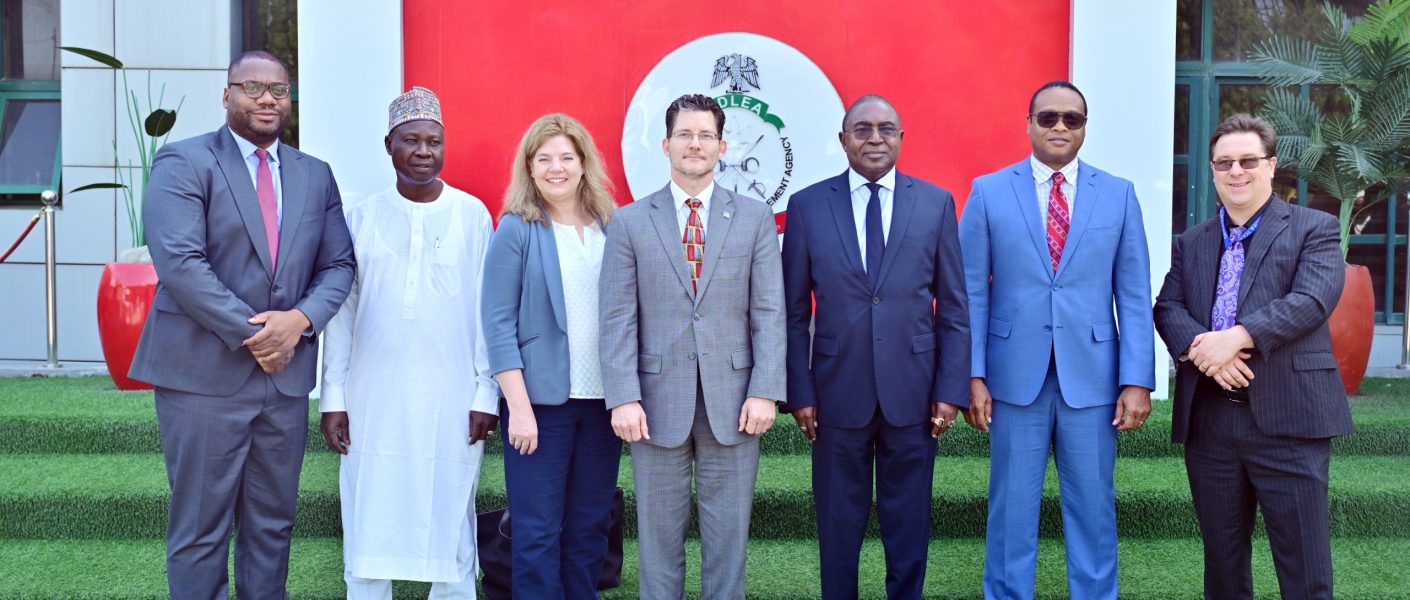
US Deputy Assistant Secretary of State for International Narcotics and Law Enforcement Affairs, Michael Gonzales, issued the warning on Tuesday during a visit to the headquarters of the National Drug Law Enforcement Agency (NDLEA) in Abuja.
His remarks followed the dismantling of four methamphetamine laboratories in Nigeria this year, which the NDLEA said were linked to Mexican criminal networks.
Gonzales, whose responsibilities cover Africa and the Middle East, said Nigeria was his first destination after assuming office four months ago, citing the country’s strategic importance and the NDLEA’s operational record.
He commended the agency’s intelligence-led investigations, collaboration with other law enforcement bodies and efforts to prosecute suspects.
According to him, the operations against the four laboratories demonstrated how coordinated law enforcement efforts could disrupt international drug supply chains and protect communities beyond Nigeria.
Gonzales likened the pressure being exerted on drug cartels in the Western Hemisphere to “squeezing a balloon”, explaining that criminal groups were seeking alternative routes through Africa to reach Europe and other markets.
He also warned of a growing shift from plant-based drugs to synthetic substances, which he said could be more difficult to detect and potentially more dangerous.
He stressed that tackling the threat required authorities to target criminal organisations as interconnected networks, including the financial systems that sustain their operations.
Responding, NDLEA Chairman Buba Marwa said recent investigations had revealed what the agency considered a deliberate attempt by criminal networks to establish Nigeria as a major methamphetamine manufacturing hub.
Marwa disclosed that NDLEA operatives had dismantled a clandestine laboratory in a forest in Ijebu East, Ogun State, where three Mexican nationals, described by the agency as methamphetamine production specialists, were arrested alongside Nigerian suspects.
He described the facility as the largest clandestine methamphetamine laboratory uncovered by the agency in Nigeria, adding that the substances recovered were valued at more than $360 million.
According to the NDLEA chairman, another operation conducted approximately four weeks later targeted an industrial-scale laboratory at Tapa Village in Oyo State, resulting in the arrest of a Mexican national and four Nigerian suspects.
He added that similar facilities were subsequently dismantled in Enugu and Ebonyi states.
“These were not isolated incidents. They show a deliberate attempt to turn Nigeria into a manufacturing hub,” Marwa said.
He maintained that the laboratories were established to supply international markets rather than serve Nigerian consumers alone.
According to him, criminal networks were seeking to establish a West African corridor for transporting large quantities of methamphetamine to Europe, Asia and the United States.
Marwa also highlighted the links between drug trafficking, illicit arms dealing and the financing of armed groups, stressing the need for coordinated cross-border operations to confront the threats.
He credited US assistance with improving the NDLEA’s forensic analysis, investigative capabilities, professional training, financial crime detection and equipment maintenance.
Presenting the agency’s performance figures, Marwa said the NDLEA had arrested 96,157 drug offenders, including 250 individuals it described as drug barons, over the past five years.
He added that the agency seized more than 15.8 million kilogrammes of illicit substances during the period, while 16,691 traffickers were convicted.
The NDLEA chairman urged Washington to sustain or increase its support for the agency, warning that any reduction in assistance could create opportunities for criminal networks to exploit weaknesses in enforcement.
“Traffickers, arms dealers and terrorists cooperate across borders every day, and governments confronting them must do the same,” he said.