
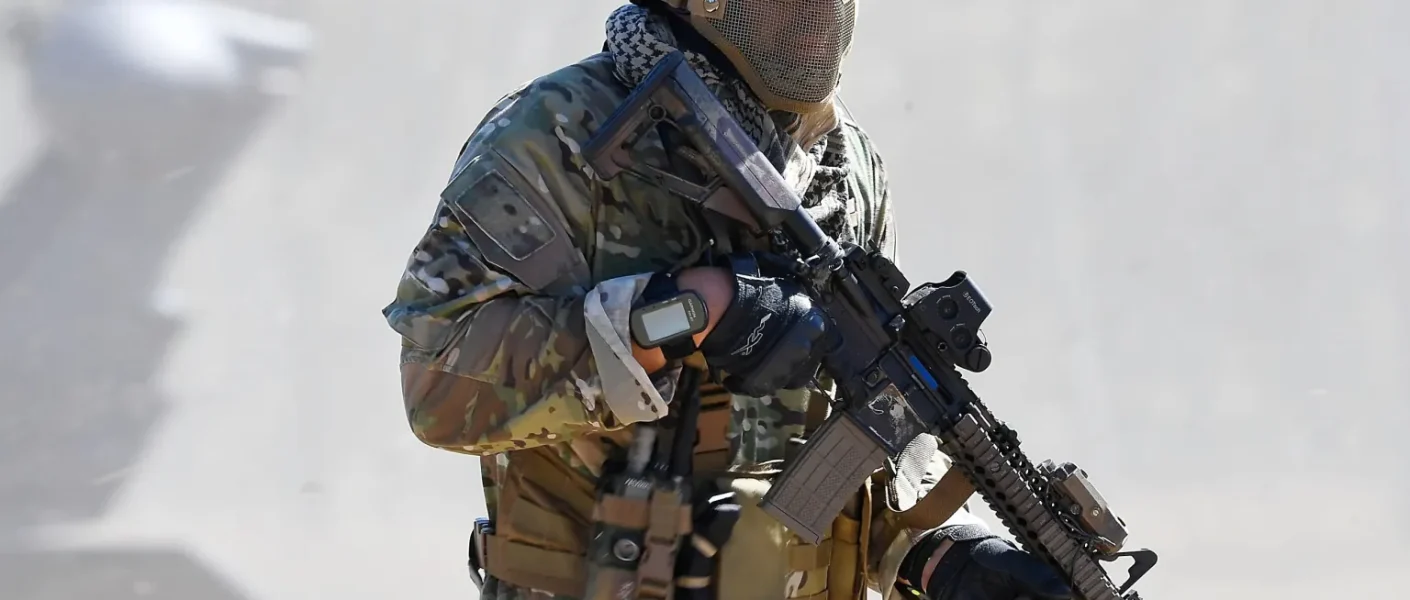
A wounded American airman, armed with only a handgun, endured a harrowing 36-hour escape through rugged mountains in Iran after his fighter jet was shot down, narrowly avoiding capture before a high-risk rescue mission brought him to safety.
The officer, a weapons systems operator aboard an F-15, ejected over southwestern Iran when his aircraft went down. Injured and isolated deep in hostile territory, he traversed unforgiving terrain before taking refuge in a narrow crevice, all while local militia forces combed the area—reportedly incentivized by a reward for his capture.
Despite suffering a leg injury, the airman relied on his Survival, Evasion, Resistance, and Escape (SERE) training to remain undetected during an intense and rapidly escalating search effort.
Security expert and former Royal Air Force pilot Mikey Kay described the situation as a race against time, emphasizing that the chances of a successful rescue diminish rapidly the longer a downed pilot remains behind enemy lines.
As the threat of capture grew, US forces launched a large-scale recovery operation involving AC-130 gunships, A-10 Warthogs, MH-6 helicopters, surveillance drones, and special operations teams. The urgency was heightened by the risk of the airman falling into the hands of Iranian forces, including the Islamic Revolutionary Guard Corps (IRGC), who were closing in with advanced surveillance and air defense capabilities.
At one point, enemy search teams reportedly came within just two miles of the airman’s position. To delay them, US intelligence operatives spread false information suggesting he had already been captured and moved, buying critical time
Locating the airman proved difficult due to the mountainous terrain, which weakened his emergency beacon signal. Eventually, intelligence teams successfully pinpointed his location and relayed the coordinates for extraction
Special operations forces then executed a daring rescue, flying in low under the cover of air support. Aircraft secured the area against threats from fighters equipped with man-portable air defense systems (MANPADS), allowing commandos to reach the airman, confirm his identity, and evacuate him safely by helicopter to Kuwait for medical treatment.
The mission faced one final setback when two US aircraft became immobilized in sand at a remote airstrip. Additional support was deployed to recover personnel, and the stranded aircraft were destroyed to prevent sensitive equipment from falling into enemy hands.
Despite the challenges and close calls, the operation was ultimately a success—bringing the wounded airman home after a tense and dangerous ordeal.