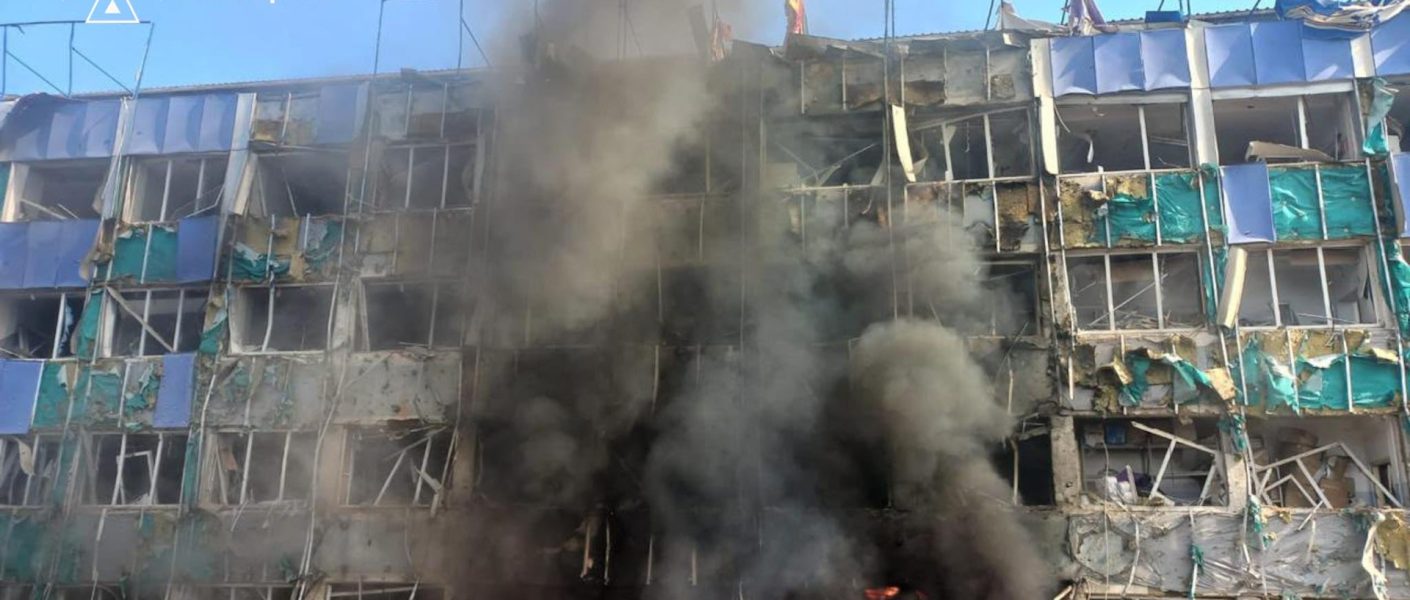
Russia is suspected of being behind a series of sabotage attacks targeting weapons manufacturers and defence facilities across Europe amid the continent’s continued military support for Ukraine.
European officials are investigating several fires and explosions at defence-related facilities, with concerns that some incidents could be part of a wider Russian campaign aimed at disrupting weapons supplies to Ukraine.
The suspected operations are believed to be designed to test NATO’s response and destabilise European countries while remaining below the threshold that could trigger Article 5, the alliance’s collective-defence provision.
One of the latest incidents involves Milrem Robotics, an Estonian defence company that manufactures unmanned military vehicles and supplies equipment to Ukraine.
A building belonging to the Tallinn-based company was set on fire on August 15. Estonian authorities are investigating whether the blaze was deliberately started and whether Russia had any involvement, while Latvian authorities have reportedly detained three Latvian nationals in connection with the suspected arson.
The incident follows other unexplained explosions at European defence facilities.
On August 10, an explosion struck EMCO, a Bulgarian arms manufacturer that produces 155mm artillery ammunition for Ukraine.
Three days later, another explosion occurred at the KNDS Ammo Italy munitions facility near Rome.
Authorities in Bulgaria and Italy have so far played down suggestions of Russian involvement, and no definitive link has been publicly established.
Western intelligence officials have increasingly warned that Moscow could be using sabotage, cyberattacks, assassination plots and criminal proxies as part of what they describe as a broader hybrid campaign against Western countries.
The suspected strategy is believed to be aimed at creating instability within NATO countries and weakening their support for Ukraine without provoking a direct military confrontation with the alliance.
NATO Secretary General Mark Rutte has described suspected Russian sabotage activities as “reckless and dangerous”, while the alliance says it is strengthening its ability to identify and counter such threats.
Russia has repeatedly denied responsibility for covert attacks across Europe, and investigators have not established Russian involvement in every incident.
However, the growing number of investigations has increased concerns among European governments that the war surrounding Ukraine is extending beyond the battlefield, with defence industries and critical infrastructure potentially becoming targets of covert operations.